Why Active Sub-Slab Depressurization Works for Radon Mitigation in St. Louis
Understanding Radon Movement in Your Home
Radon is a radioactive gas that comes from the natural decay of uranium in soil and rock. It moves up through the ground and into the air we breathe. When a house sits on a concrete slab, the gas can seep through cracks, joints, and gaps in the foundation. In St. Louis, where the EPA has designated much of the region as a high radon zone, homeowners face a real risk. The only way to reduce that risk is through proper radon mitigation.
There are several approaches to radon mitigation, but one of the most effective for homes with a concrete slab is active sub-slab depressurization. This method creates negative pressure beneath the slab, which stops radon from entering the living space. Instead of letting the gas push its way up through small openings, the system pulls it from below and vents it safely above the roofline.
How Active Sub-Slab Depressurization Works
An active sub-slab depressurization system starts with a suction point. A contractor drills a hole through the concrete slab, usually in a basement or a utility room. Into that hole goes a length of perforated pipe, which extends horizontally beneath the slab. The perforations allow the system to collect radon from a wide area under the house. The pipe is then connected to a radon fan, which runs continuously. The fan creates negative pressure, so air and gas are drawn from the soil under the slab and pushed up through a vent pipe that exits above the roofline.
The key to making this work is sealing the slab. Any gaps around the suction point, along the edges of the slab, or around utility penetrations need to be filled with a high-quality sealant. Without a good seal, the system will pull conditioned air from inside the house instead of pulling from the soil, which wastes energy and reduces effectiveness. A professional installer will also check for other entry routes, like cracks in the slab or gaps around pipes, and seal them as part of the job.
Once the system is running, you can verify it with a manometer. A U-tube manometer is a simple device that shows whether the radon fan is maintaining negative pressure under the slab. It has a small tube filled with liquid, and when the system is working, the liquid sits at different levels on each side, indicating suction. If the levels are equal, the system may have a leak or the fan may not be running. A quick glance at the manometer tells you the system is doing its job.
Why It Matters for St. Louis Homes
St. Louis sits on soil that can produce significant radon levels. Many homes here were built before radon mitigation was common, so they lack sub-slab depressurization systems. Adding one is a straightforward retrofit. The process involves locating a good spot for the suction point, running the piping through the slab, and installing the fan in a place where it can vent outside. The work usually takes a day or two, and the disruption is minimal.
After installation, a post-mitigation test with a radon test kit confirms the system is working. The EPA recommends testing after at least 48 hours of system operation. If the radon level drops below the action level of 4 picocuries per liter, the system is considered effective. Many systems achieve levels well below that, sometimes under 1 pCi/L.
Comparing to Other Methods
Active sub-slab depressurization is not the only option. For homes with a crawlspace, sub-membrane suction can work. That method involves laying a heavy plastic membrane over the dirt floor and pulling air from beneath it. For homes with a basement slab, active soil depressurization is another term you might hear. It is essentially the same concept as sub-slab depressurization but applied to the soil around the foundation. The choice depends on the house envelope and the type of foundation.
For a home with a concrete slab, though, active sub-slab depressurization is usually the best fit. It directly addresses the main entry point for radon. It also tends to be more reliable than passive systems, which rely on natural air currents and may not create enough negative pressure to be effective. A passive system might lower radon levels a bit, but in a high radon zone like St. Louis, active is the standard.
What to Expect During Installation
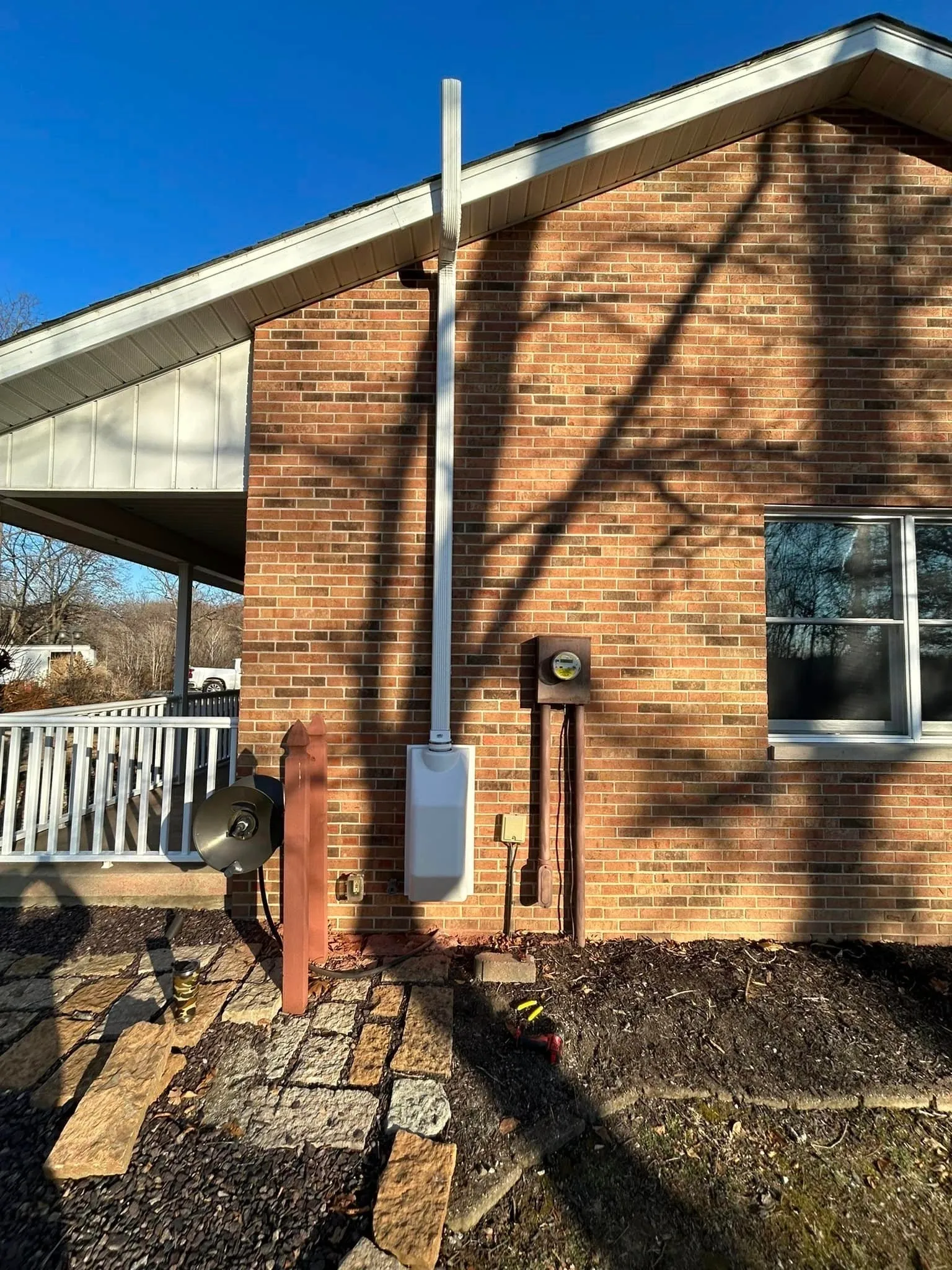
If you call a company like Air Sense Environmental, they will start with a radon test to measure the current level. Then they will inspect the slab, check the house envelope, and decide where to place the suction point. The installation involves cutting a hole in the slab, digging out a small cavity underneath for the perforated pipe, and connecting the pipe to the radon fan. The fan is mounted outside or in an unconditioned space like an attic, and the vent pipe runs up the side of the house. The entire system is sealed and tested before the crew leaves.
One thing to watch for is the manometer after installation. It should show a steady negative pressure. If it does not, the contractor will troubleshoot by checking seals, the fan, and the piping. Sometimes a leak in the sealant around the suction point can cause a loss of vacuum. A good installer will take the time to get it right.
Long-Term Maintenance
Active sub-slab depressurization systems require very little maintenance. The radon fan is designed to run for years, but it can wear out over time. Some fans have a lifespan of five to ten years. The manometer gives you a visible indication of whether the fan is still pulling. If the liquid levels equalize, the fan may have failed or there could be a blockage. A simple check once a month is enough to catch problems early.
It is also a good idea to retest the radon level every two years or after any major renovations. Changes to the house envelope, like adding new windows or altering the foundation, can affect how radon enters. A post-mitigation test after any significant work will confirm the system is still functioning.
Is It Worth the Investment?
For homeowners in St. Louis, the answer is almost always yes. Radon is the second leading cause of lung cancer after smoking, and it is invisible and odorless. You cannot detect it without a radon test kit. A mitigation system is a one-time cost that protects your familys health for decades. The peace of mind that comes from seeing a low number on a test kit is hard to overstate.
If you are considering a system, look for a contractor who uses a manometer for verification and performs a post-mitigation test. Those steps separate a professional installation from a quick fix. A well-designed active sub-slab depressurization system will keep your home safe without requiring much from you beyond an occasional glance at the U-tube manometer.